The little moments, moments that some people might not even notice are the moments that I hold in my heart. It's having your spouse by your side. Knowing that your kids love you, or even just a quiet moment to yourself.
They're the moments that get me through some of my tougher days. They are what life is all about.
Years ago while I was working as a teacher and it was easy for me for many of those years to walk my students across the playground or to climb the stairs eight times a day to my classroom and then suddenly I was getting dizzy walking across the playground. Suddenly I was losing my breath going up the stairs.
My early symptoms, they were related to things that a lot of people might blame on getting older for women hitting menopause or packing on a few extra pounds.
As the symptoms progressed, I began to understand that this was something that I needed to address. I sought medical attention and was misdiagnosed as so many people with pulmonary arterial hypertension are.
My cardiologist was certain I had a hole in my heart and there were several invasive tests done and it could not be found. At the time that I was being misdiagnosed, I felt like I didn't have a role in my medical care. Eventually, I was referred to a local university.
That's when I got my diagnosis of PAH or pulmonary arterial hypertension. I was relieved that we finally had an answer to what was going on. And I was excited to find a treatment plan that could help slow down the disease, get back to some of the more active things that I used to do.
My initial treatment plan included a prostacyclin class medication. My doctor said it was important to treat PAH in multiple ways. We also have other types of PAH medications available that work on the nitric oxide, endothelin, and activin signaling pathways.
Although it took some time, I kept working with my specialists to find the right prostacyclin class medication for my PAH. For me, that was a pill. I was excited about the flexibility an oral medication would give me in my daily life.
It allowed me to play more actively with my grandchildren. It allowed me to engage more frequently with other people in different social settings. I still deal with headaches and flushing, but I work with my doctor to manage that.
My doctor made it clear how important it was to keep treating the prostacyclin pathway as part of my treatment plan. My treatment plan is still working for me and I'm glad I've stuck with it. If I could go back and talk to myself on the day that I was diagnosed, I would definitely tell myself that not only are things going to be okay, but in some ways things are going to be even better because you're going to look at the world through lenses that a lot of people don't get to use.
They don't ever get to notice some of the small things that I get to notice.
I look forward to being able to travel more. My husband and I are recently empty nesters and it would be exciting to see some parts of the world that we haven't seen take on some challenges that we haven't taken on.
And I feel with my medical care and with my therapy that I'm able to do that. I am excited for what the future has in store, but I am in no rush. I'm taking it one little moment at a time.
Like so many others who eventually are diagnosed with pulmonary arterial hypertension (PAH), Nancy’s symptoms (breathlessness, trouble climbing stairs, getting dizzy, gaining weight) were not recognized as signs of something more serious. Nancy even dismissed her concerns as just part of growing older, but eventually she couldn’t ignore her symptoms any longer. After being misdiagnosed, she eventually learned she had PAH.
Getting a diagnosis was difficult, but there were two silver linings to her diagnosis. Getting on a treatment plan that finally treated her symptoms helped her get back to doing some of what she really wanted to do. Living with PAH also taught her to appreciate life’s little moments that she had taken for granted.

Sign up to receive future magazines, our email newsletter, and other useful resources to help navigate life with PAH.
Sign UpPAH is a complicated disease that can be difficult to understand. We’ve broken it down for you with easy-to-understand information, simple graphics, and informative videos from a PAH specialist.
What Is PAH?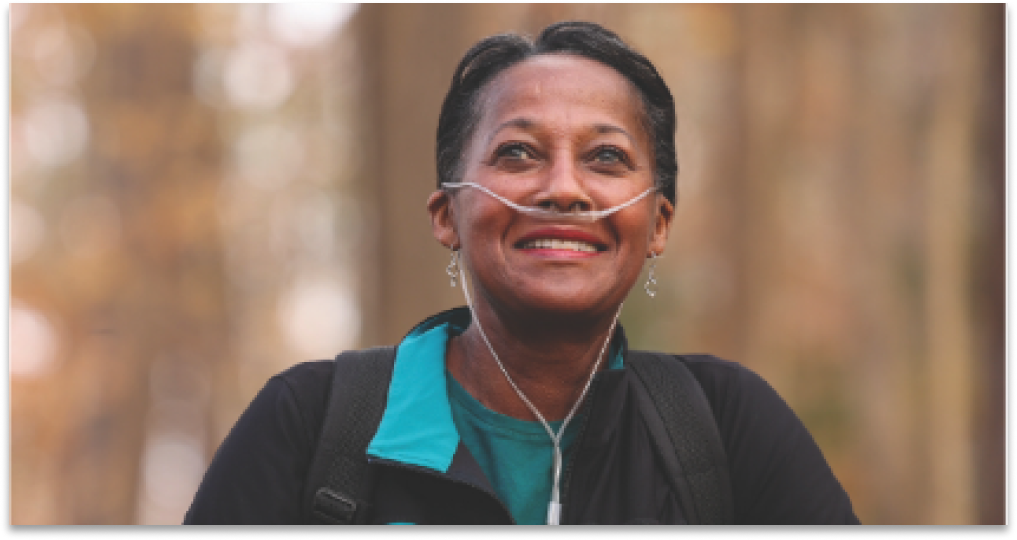
Learn how Peggy renewed her competitive spirit after her PAH diagnosis and how she won't let an oxygen tank define her.
Competitive Spirit with PAH ⟩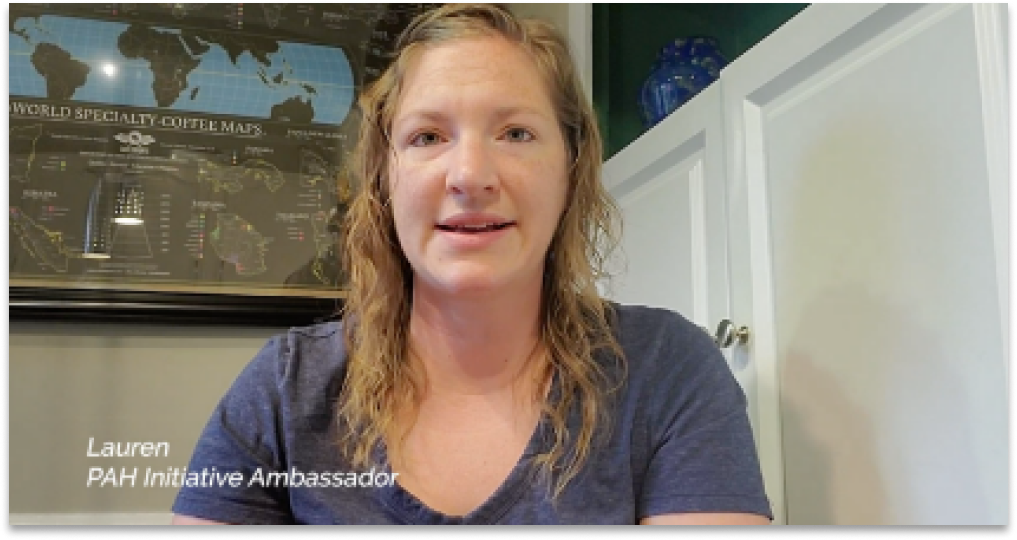
How has knowing their risk status helped Lauren and Karen better understand if their treatment plan is working?
Knowing your PAH Risk Status ⟩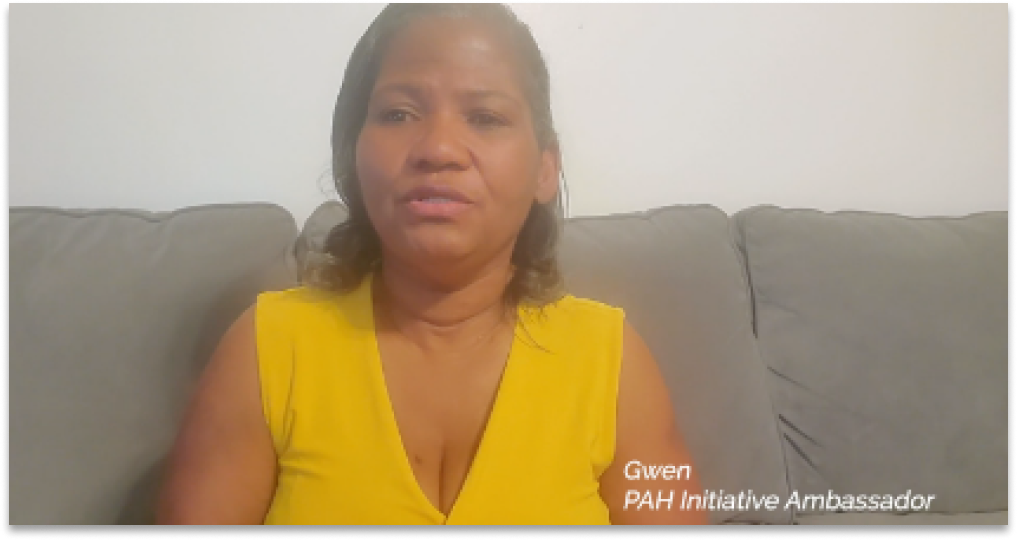
Living with PAH can be a big adjustment and taking care of yourself can make a big difference. But where do you start?
Self-Care and Healthy Living ⟩