
What is Functional Class?
Functional Class is an important way for you and your specialist to measure the severity of symptoms you experience during everyday activities. The 4 Functional Classes in pulmonary arterial hypertension (PAH) were developed by the World Health Organization (WHO) and are used by doctors to predict life expectancy.

“I didn’t feel like I had any energy or strength; I was frustrated. My pulmonologist told me, ‘You have to own this disease, John. You’re not going to be successful in this journey unless you own it.’” —John, PAH Initiative Patient Ambassador
The 4 Functional Classes
Your doctor will place you in one of 4 classes based on how you typically feel during everyday activities.

- Daily activities do not cause PAH symptoms
- Normal routines do not cause tiredness or breathlessness
- Everyday activities like walking, climbing stairs, or doing housework do not cause symptoms
- Activities are not avoided because of PAH symptoms

- Daily life is slightly limited by PAH symptoms
- Few to no symptoms occur when resting, but normal activities like shopping, walking on flat ground, climbing a few stairs, or light household chores cause tiredness, shortness of breath, or dizziness
- Activities like brisk walking or heavy lifting are avoided or reduced because they cause symptoms

- PAH symptoms seriously limit the daily routine
- Even simple tasks like getting dressed or walking a short distance cause tiredness or breathlessness
- Light activities like walking short distances or doing basic chores are avoided because symptoms come on quickly

- Symptoms occur even when resting or doing activities that don’t involve movement, like watching TV
- Even mild physical activity (like sitting up or getting out of bed) causes serious discomfort, breathlessness, or faintness
- Due to symptom severity, almost all physical activity is avoided, and help is needed with daily tasks
How your specialist determines your Functional Class
Your PAH specialist will ask you about how you are feeling—what your daily activities are like and if they cause any symptoms like shortness of breath, fatigue, lightheadedness, dizziness, or even fainting. Be sure to talk with your specialist about the activities that cause your symptoms, as well as those you avoid or no longer do as often because of symptoms. This helps your specialist determine your Functional Class as accurately as possible.
Your specialist should ask about your goals for treatment, too. Your answers will help your healthcare team figure out your Functional Class.

Be as thorough as possible when describing your symptoms—the information you provide is vital to helping your specialist assess your Functional Class.
How does your specialist use Functional Class as part of your care?
Functional Class is one way your specialist understands how PAH is affecting your daily life. By describing your symptoms and how much they limit your activities, your care team can track how your disease is changing over time.
But Functional Class is about more than symptoms. Together with other tests, it helps build a more complete picture of your overall PAH, called “risk status.” Risk status combines your test results and assessments to guide you and your specialist in creating your initial treatment plan, keeping track of how your PAH is changing, and deciding when adjustments are needed.
Because symptoms often show up after changes in your PAH have already started, improving your risk status may do more than help you feel better today. It may also help slow the disease and may even delay or prevent new symptoms—giving you more confidence in managing your PAH and more control over your tomorrow.
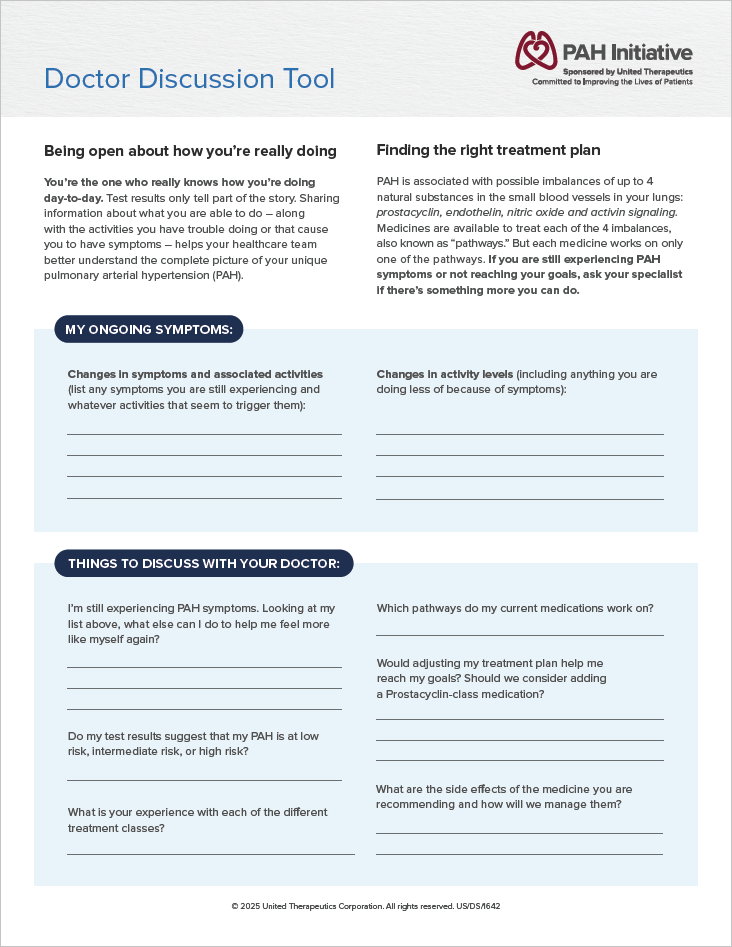
Be prepared to discuss your symptoms
Talking openly about your symptoms with your PAH specialist is crucial for determining Functional Class. Use this guide to start the discussion with your doctors about how your symptoms and Functional Class might be improved.
Download Doctor Discussion GuideGet the full picture of your unique PAH
Functional Class is just one part of your PAH evaluation. By also looking at your risk assessment, your specialist gets a more complete picture of your PAH to better guide your care.
PAH Life Expectancy & Risk Status