
Nicole's Story: Living Fully with Pulmonary Arterial Hypertension Oxygen Therapy

PAH Initiative Ambassadors are patients living with PAH or are caregivers, and they were compensated for their time.
Nicole with arms crossed smiling spotlight image

Nicole's Story: Living Fully with Pulmonary
Arterial Hypertension Oxygen Therapy

How Nicole Views Oxygen as a Tool, Not a Setback

For many people living with pulmonary arterial hypertension (PAH), supplemental oxygen can feel like a visible sign of their illness—something that sets them apart or signals limitation. For Nicole, oxygen has come to represent something different: movement, independence, and adaptability.

Nicole was diagnosed with PAH when she was a teenager. Supplemental oxygen became part of her daily life at the same time as her diagnosis—intertwined with the shock, fear, and uncertainty of learning that she had a rare condition. “It got wrapped up in all the feelings of being diagnosed,” Nicole said. “It made me feel different. Nobody else my age was wearing it.”

At first, oxygen felt like a limitation for Nicole. It was a visible reminder of her PAH and, for a young person trying to blend in, a symbol that set her apart. But over time, that perception changed. What once felt like something holding her back slowly became the very thing that allowed her to move forward.

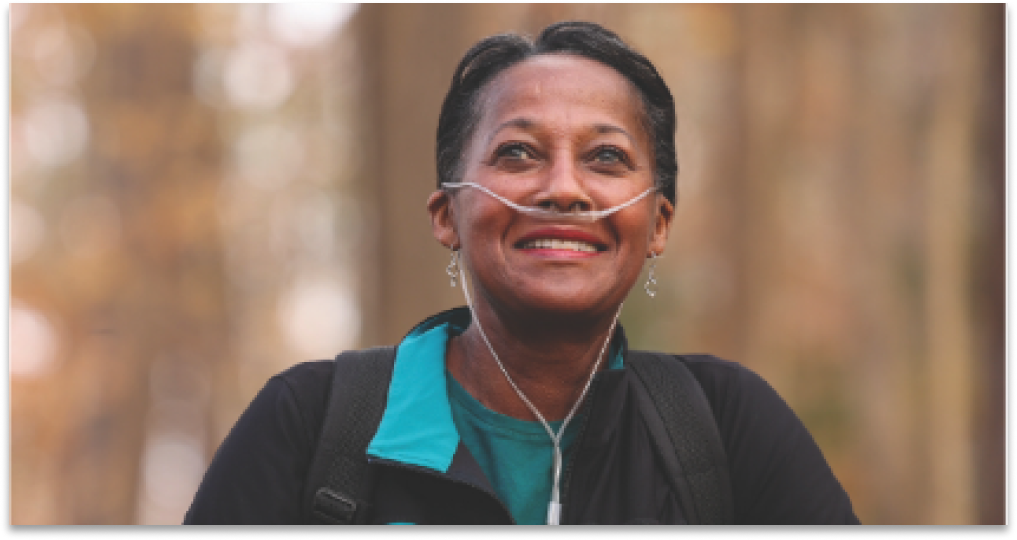
Navigating Life With Oxygen

In the early days after her diagnosis, physical activity for Nicole was difficult. Like many people living with PAH, she had the misconception that oxygen use automatically meant a sedentary life.

A turning point came when Nicole began pulmonary rehabilitation. She spent several years going to rehab periodically, learning how to move her body safely, practice breathing techniques, and rebuild her confidence. Through rehab, Nicole began to see oxygen not as a restriction, but as a support. It helped her tolerate activity and exercise more.

“It’s a gradual process,” Nicole explained. “You build up. Patience and consistency are key.” Today, her routine is built around patience, consistency, and planning. She walks about a mile each day, uses hand weights, and listens closely to her body.

“It took me a long time to accept that I have to wear it, but it’s helped me do more than I ever thought it could, and for that, I’m very grateful.”

–Nicole, PAH Initiative Patient Ambassador

Nicole Portrait

Making Plans

Living with supplemental oxygen requires preparation, something Nicole and her mother, Jane, have learned well. Whether it’s choosing between a tank and a portable oxygen concentrator, packing extra supplies, or mapping out charging stations, planning is key.

“There’s no spontaneity with oxygen,” Jane said. “You have to plan everything—how long you’ll be out, how much oxygen you’ll need, and what the day will look like.”

Nicole agrees, but she doesn’t see planning as a downside. Instead, it’s part of how she maintains independence. “If you can’t do an all-day outing, that’s okay,” she said. “Maybe you just do lunch. It’s about adjusting expectations.”

Socially, Nicole has found friends who are understanding, though adjustments are sometimes required. “Friends may be used to all-day activities, and I have to explain my limits,” she said. “Some people are accepting. Others say they are, but they don’t fully grasp the day-to-day realities of living with oxygen.”

Letting Go of Stigma

One of the hardest parts of using oxygen, especially at a young age, has been navigating stigma. Nicole knows many patients who avoid wearing oxygen in public, even when they need it. “There’s this perception that if you need oxygen, you must be really sick,” she said. “That stigma exists for younger and older patients alike.”

For a long time, Nicole felt shame around her oxygen use. “It’s the most visible sign of my PAH,” she said. “It lets everyone around me know that I am disabled.” Acceptance didn’t come overnight, but it came with experience and results.

“I’ve accepted that I need it and that it helps me,” she said.

Visibility, Nicole believes, matters. The more people see others confidently using oxygen, the less isolating it becomes. “I wish more people who need oxygen would wear it,” she said. “It might make everyone feel a little less different.”

Jane has watched that confidence grow over the years. “When I look at Nicole’s whole life from before her diagnosis to now, I see her as my hero,” she said. “She’s handled things no one should have to endure. Yet she takes her medication and wears her oxygen like she should with no complaints.”

Moving Forward, One Breath at a Time

On difficult days, frustration still surfaces. But even on those hard days, she keeps moving forward, guided by the belief that caring for her body is an act of living fully.

“I’ve always had the attitude that if I want to survive, I have to do this,” she said. “Even when it’s hard.”

For Nicole, oxygen isn’t about limitation. It’s about possibility. It’s what allows her to walk further, exercise safely, travel with planning, and maintain independence.

“It took me a long time to accept that I have to wear it,” Nicole said. “But it’s helped me do more than I ever thought it could, and for that, I’m very grateful.”

Quick Tips: Traveling With Oxygen

Start with your doctor: Ask for a travel letter detailing your oxygen needs.

Talk to your oxygen provider early: Many companies can arrange rentals or deliver equipment directly to your hotel room. 

Know airline rules: Only approved portable concentrators are allowed on planes; tanks are not. 

Plan ahead—and then plan some more: Traveling with oxygen takes time, patience, and backup plans. But it is possible. 

Learn more about PAH

PAH is a complicated disease that can be difficult to understand. We’ve broken it down for you with easy-to-understand information, simple graphics, and informative videos from a PAH specialist.

What Is PAH?

Ambassador spotlight - Peggy

Learn how Peggy renewed her competitive spirit after her PAH diagnosis and how she won't let an oxygen tank define her.

Competitive Spirit with PAH ⟩

What PAH risk status means to me

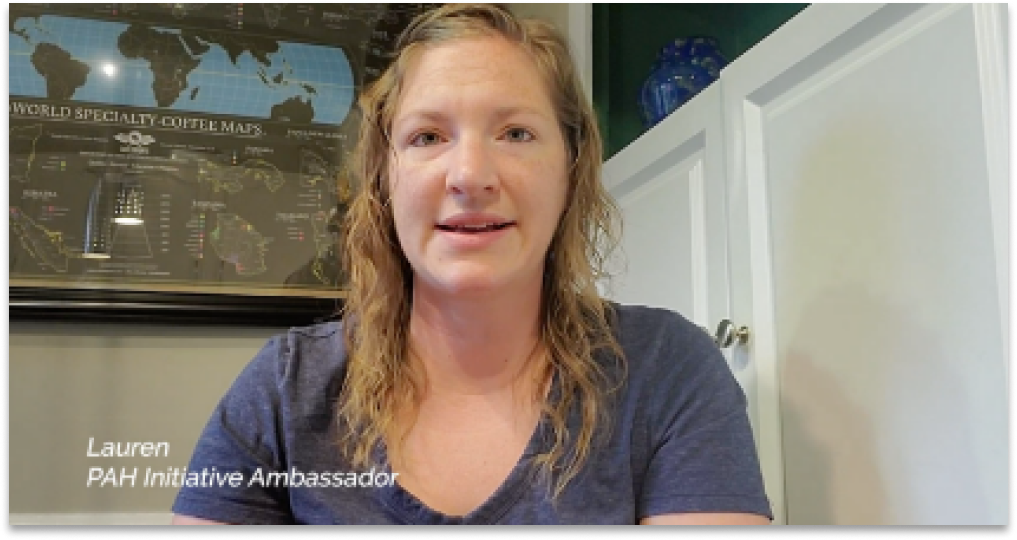
How has knowing their risk status helped Lauren and Karen better understand if their treatment plan is working?

Knowing your PAH Risk Status ⟩

Self-Care and healthy living with PAH

Living with PAH can be a big adjustment and taking care of yourself can make a big difference. But where do you start?

Self-Care and Healthy Living ⟩

Join the initiative!

X

Sign up to stay informed about PAH and the PAH Initiative. It’s quick and easy.

Yes, sign me up