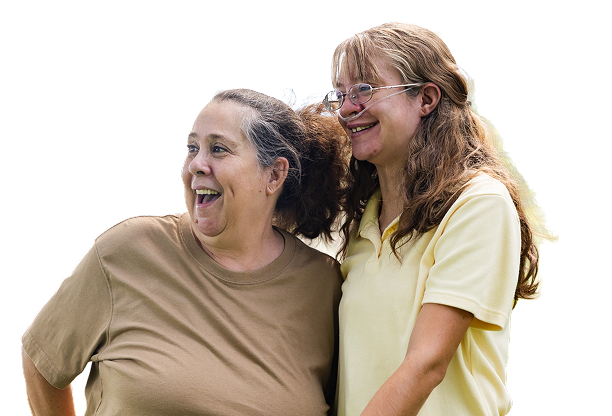
In the often-overwhelming role of caring for a loved one living with pulmonary arterial hypertension (PAH), the dedication and resilience of caregivers is critical. However, to do this effectively, caregivers also need to prioritize their own well-being to maintain strength and compassion.
From the time Jane was pregnant with her daughter, Nicole, she felt that something wasn’t right—a mother’s intuition, perhaps. As a child, Nicole was sick all the time with chronic issues, but her pediatrician kept assuring Jane that Nicole was perfectly healthy.
Eventually, Jane accepted that the doctor must know more than she did, so she carried on as usual.
When Nicole was just two years old, Jane noticed that she would get out of breath just running down the hallway. At 15, Nicole couldn’t ride a bicycle two blocks without having to stop to catch her breath.
Determined to get answers, Jane took Nicole back to the doctor. “I insisted that we weren’t leaving until we knew what was wrong,” Jane said. Nicole was eventually diagnosed with PAH after a referral to a cardiologist who performed a right-heart catheterization.
A Balancing Act
Although Nicole is now an adult, Jane maintains an active role as her caregiver and power of attorney. Her caregiving role doubled as a result.
“I manage all of the administrative aspects of Nicole’s care,” Jane said. “I handle her specialty pharmacy and retail pharmacy medication refills, I schedule all of her appointments, and I attend them with her.”
Nicole, now 30, lives at home and has started to take a more proactive approach to her own healthcare by asking questions at her appointments. Jane tries not to overstep during these moments but knows when to step in when Nicole needs support.
“If Nicole makes a statement that I don’t agree with, I might chime in,” Jane said. “But I avoid acting like I’m making decisions on her behalf, unless she signals for my help. She will look at me a certain way, and that’s when I know she wants me to speak up.”
Jane said caregiving is a balancing act and that, sometimes, it’s easy to lose oneself in the daily routine of caring for a loved one with a chronic illness. Caregiving, she says, requires a lot of hard work, self-reflection, and determination to show up—not just for your loved one, but for yourself as well.
“I wish I had a magic wand to wave that could make this process easier,” Jane said. “I struggle with it myself. I am Nicole’s caregiver, and I watch her struggle every single day. As a parent, it’s very hard to watch your child go through that.”